
Conde House Japan– Author –

-
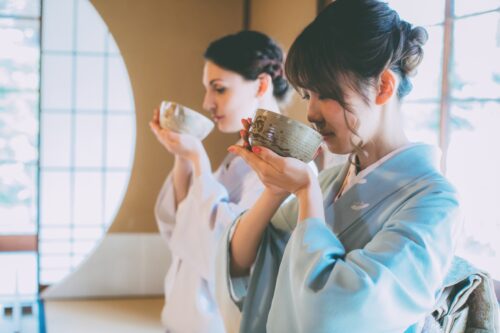
The Zen Paradox: Why an Old Rock is Beautiful (and Why I Can’t Stylize Snacking)
What makes Sadō (tea ceremony) a profound ritual rather than just drinking tea? I argue that the merchant who formalized it was a genius to elevate a simple daily routine. This leads to the Zen Paradox: the spiritual core of mindfulness that balances objective observation (seeing a dirty rock as it is) with imaginative emptiness (seeing a whole garden in a single flower). We hope this Zen spirit will make you see expansive beauty in the simplicity of our furniture. -

The Nirvana Paradox: Why I Chose Craftsmanship Over Grunge
I once thought I was a genius for shooting BB holes into my mother's Beatles records. I was wrong. Join me as I deconstruct Nirvana’s "forbidden" destruction of rock, argue why cave-painting Neanderthals were the original punks, and explain why at CondeHouse, we believe that staying "Pre-Nirvana" in our commitment to quality is the most radical thing we can do. -

How to Get Free from the Desire to Be Free
【Free from desire for possesions?】 A house surrounded by a white picket fence, a SUV, two kids, a dog, and a stable job. Many people once believed they were essential components of a dream life. Now, the times have changed, and the era... -

The Beauty of Imperfection: Why the Japanese Cherish Falling Cherry Blossoms and Decaying Ruins
Why are Japanese people addicted to cherry blossoms even when the petals are falling? I explore the national aesthetic that finds beauty in the transient and imperfect, connecting it to the popularity of decaying ruins and our vulnerability to natural disasters. This philosophy—Wabi-Sabi—teaches us to cherish a single petal in a puddle over a perfect bloom. I conclude by explaining how this spirit is applied to our wooden furniture, where uneven character and aging are, in fact, the design. -
The Backlash Wisdom: Why Ambiguity is the Japanese Architect of Harmony (and the Key to Durable Furniture)
Ambiguity is a necessary evil—a survival mechanism. We explore the theory that Japanese ambiguity is genetic (linked to S-alleles of the serotonin transporter). Discover the Backlash Wisdom: Ambiguity is not a failing, but a necessary cultural cushion—just like the intentional 'play' in a wooden furniture joint that keeps the whole structure from tearing itself apart. -

The Death of the “Monster”: Why Efficiency is Killing Our Passion
In the 90s, the only rival for a GT-R was another GT-R. Explore the "American Graffiti" days of Hokkaido's streets and why our past chairman’s defiance of marketing reflects the beautiful, irrational soul of human craftsmanship. -

The Pyramid Paradox: Why We Build Things That Last Forever
Obayashi Corporation proved the pyramid legends are impossible, but perhaps the "mystery" is the point. Join me as I explore Taro Okamoto’s theory on incomprehensible art, the fragility of lost civilizations, and why Japan’s Ise Grand Shrine is the ultimate backup system designed to prevent the catastrophe of forgetting. -
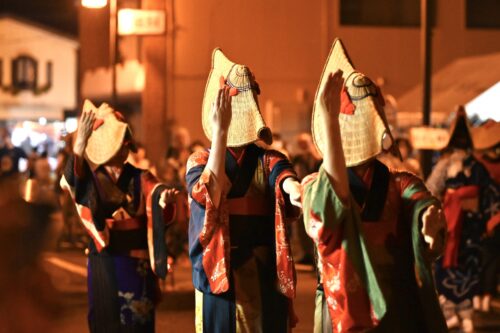
The Sacred Chaos: Why Japanese Summer Festivals Are Essential for Local Relationships (And Our Complicated Faith)
We are a nation that is both deeply pragmatic and quietly spiritual. We have three times more shrines than convenience stores. Natsu Matsuri is essential, not for the gods, but for workplace harmony—and convincing ourselves that summer is finally, truly over. -

The Productivity Killer: Why Japan’s “Do You Have a Minute?” Is the Most Disruptive Question in Office History
Why is Japan's most polite question—"Do you have a minute?"—the biggest productivity killer? I dissect the high-context culture of the Japanese office, where "Wa" equals mutual surveillance. I argue this constant interruption forces a cognitive shift that minimizes deep work, and propose a flexible design solution to fight the deadly disease of loneliness—or failing that, a strategic escape ticket to Tokyo. -

The Deepest Blue: From Samurai Workwear to Furniture Upholstery (The Allure of Japan Blue)
"Japan Blue," the color of the Tokyo Olympics, was named by a British chemist in 1875, who saw the entire nation draped in indigo workwear. Natural indigo is notoriously difficult, requiring delicate adjustment, but it yields unparalleled depth. This commitment to meticulous craft defines Okayama Denim, which is internationally prized despite our small market size. When our Singaporean dealer insisted on a collaboration, we partnered with the top maker, "Japan Blue." Now, you can order our furniture upholstered in their special denim—a synergy of modern design and ancient skill. The best part? This furniture denim is fade-resistant. There's truly no reason not to buy it.