
Japanese Culture and Traditions– category –
-

What Is Life in a Humane Manner?
【The COVID, the one-way time machine】 The COVID is sometimes called "a time machine." Remote work is a good example. I think most of the companies at least in Japan just pretended to take a positive attitude but actually were not so se... -

The Anatomy of Japanese Craftspeople of Swordsmith and Furniture
【Something in common between Japanese knives and furniture】 Just before entering the furniture business, I worked in the fishery industry and often took overseas clients to the biggest fish market in Tokyo. It was now-closed Tsukiji ma... -

The Sound of Silence: Do You Have the “Ninja Ears” of the Japanese?
My sister thinks my personality is "Tofu," but my brain thinks insect noises are a language. Join me as I explore the bizarre world of Japanese onomatopoeia—where we can talk only in "fluffy" sounds—and discover the "Ninja Ears" that allow our craftsmen to hear the silent voices of Hokkaido trees. -

The Complex of the Frontier: How a Baseball Victory Changed the Soul of Hokkaido
TDoes a shared inferiority complex shape a regional soul? I argue that Hokkaido people—who often view the mainland as the 'better' Japan—have historically carried the Complex of the Frontier. I trace the moment this complex found catharsis: the 2004 high school baseball victory. This shift created a unique Hokkaido Humility—a grounded flexibility that defines our local spirit and is reflected in the open-mindedness of our furniture craftspeople. -
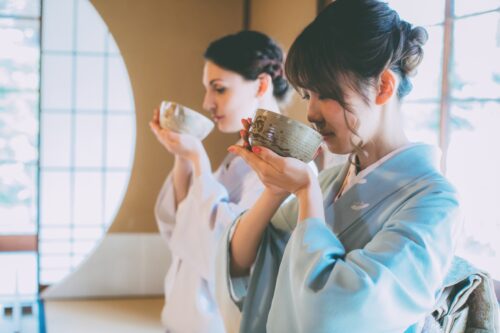
The Zen Paradox: Why an Old Rock is Beautiful (and Why I Can’t Stylize Snacking)
What makes Sadō (tea ceremony) a profound ritual rather than just drinking tea? I argue that the merchant who formalized it was a genius to elevate a simple daily routine. This leads to the Zen Paradox: the spiritual core of mindfulness that balances objective observation (seeing a dirty rock as it is) with imaginative emptiness (seeing a whole garden in a single flower). We hope this Zen spirit will make you see expansive beauty in the simplicity of our furniture. -

The Beauty of Imperfection: Why the Japanese Cherish Falling Cherry Blossoms and Decaying Ruins
Why are Japanese people addicted to cherry blossoms even when the petals are falling? I explore the national aesthetic that finds beauty in the transient and imperfect, connecting it to the popularity of decaying ruins and our vulnerability to natural disasters. This philosophy—Wabi-Sabi—teaches us to cherish a single petal in a puddle over a perfect bloom. I conclude by explaining how this spirit is applied to our wooden furniture, where uneven character and aging are, in fact, the design. -
The Backlash Wisdom: Why Ambiguity is the Japanese Architect of Harmony (and the Key to Durable Furniture)
Ambiguity is a necessary evil—a survival mechanism. We explore the theory that Japanese ambiguity is genetic (linked to S-alleles of the serotonin transporter). Discover the Backlash Wisdom: Ambiguity is not a failing, but a necessary cultural cushion—just like the intentional 'play' in a wooden furniture joint that keeps the whole structure from tearing itself apart. -
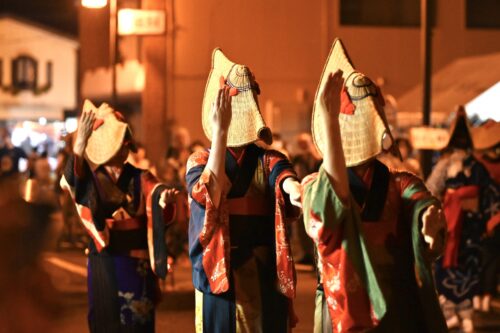
The Sacred Chaos: Why Japanese Summer Festivals Are Essential for Local Relationships (And Our Complicated Faith)
We are a nation that is both deeply pragmatic and quietly spiritual. We have three times more shrines than convenience stores. Natsu Matsuri is essential, not for the gods, but for workplace harmony—and convincing ourselves that summer is finally, truly over. -

The Productivity Killer: Why Japan’s “Do You Have a Minute?” Is the Most Disruptive Question in Office History
Why is Japan's most polite question—"Do you have a minute?"—the biggest productivity killer? I dissect the high-context culture of the Japanese office, where "Wa" equals mutual surveillance. I argue this constant interruption forces a cognitive shift that minimizes deep work, and propose a flexible design solution to fight the deadly disease of loneliness—or failing that, a strategic escape ticket to Tokyo. -

The Swing of the Metronome: Why I Refuse to “Be Realistic”
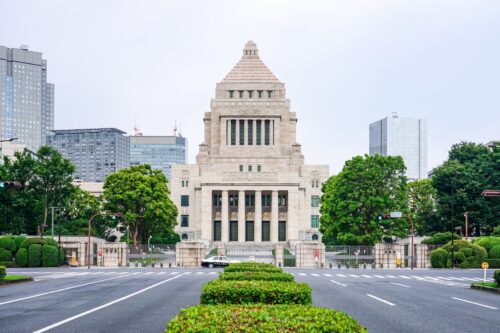
Inside Japan’s fortress of power, even the elite were powerless against the swing of the metronome. Join me as I recount the collapse of the Ministry of Finance’s paper towers on March 11, 2011, and why that day convinced me that "responsible adults" must reject the easy path of realism and fight for their ideals.