
japanese culture– tag –
-

The Hidden Complexity: Why Japanese Craftsmanship Must Be Simple (The Ferrari Paradox)
An Italian spends the world's last day with a lover; a Japanese person finishes work. We analyze the Ferrari Paradox. Discover the secret articulated by Ferrari designer Ken Okuyama, who sketched a history-making concept in just 15 minutes: "What looks simple is not simple. It’s designed to look simple." -

The Anti-Sport Philosophy: Why Kendo Will Never Be in the Olympics
Why does Kendo resist Olympic inclusion? I explore the Anti-Sport Philosophy of Kendo, where natural expressions of victory are penalized and the bamboo sword is treated as the soul of the samurai. This ritualistic Way of Life is rooted in a deep Japanese reverence for tools. I conclude by revealing how the very same Kendo spirit—the humble partnership with one's instruments—is what drives the quality and meticulous care in our Hokkaido furniture factory. -

The Earthquake Test: Why Japanese Castles Are Designed to Survive, Not Impress
TWhy did European castles have high stone walls while Japanese castles relied on wood? I compare the architecture of France’s Carcassonne with Japan’s design, revealing how earthquake threats forced a strategy of resilience, not impression. This analysis uncovers the political divide—total war vs. civil war—and concludes that understanding the "other" is the only way to recognize the unique value of the "self." -
The 1,000-Year Nail: Why Kamakura Samurai Nails Were Stronger Than Temples
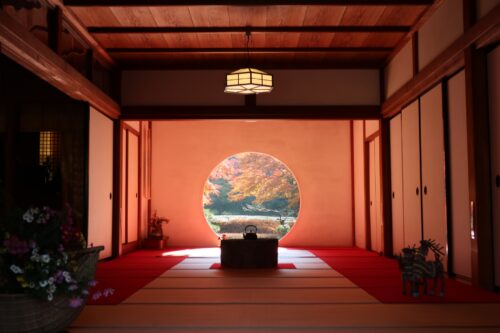
Kamakura—the modern pilgrimage site for Slam Dunk fans—was once the birthplace of the strongest Samurai. We unveil the 1,000-year-old secret of Japanese structural philosophy: ultimate strength is not in rigidity, but in controlled, flexible movement. Our furniture applies this ancient wisdom, using stealth metalwork to ensure the wood can flex and endure—just like a temple surviving a seismic shock. -

The Sound of Silence: Do You Have the “Ninja Ears” of the Japanese?
My sister thinks my personality is "Tofu," but my brain thinks insect noises are a language. Join me as I explore the bizarre world of Japanese onomatopoeia—where we can talk only in "fluffy" sounds—and discover the "Ninja Ears" that allow our craftsmen to hear the silent voices of Hokkaido trees. -

The Complex of the Frontier: How a Baseball Victory Changed the Soul of Hokkaido
TDoes a shared inferiority complex shape a regional soul? I argue that Hokkaido people—who often view the mainland as the 'better' Japan—have historically carried the Complex of the Frontier. I trace the moment this complex found catharsis: the 2004 high school baseball victory. This shift created a unique Hokkaido Humility—a grounded flexibility that defines our local spirit and is reflected in the open-mindedness of our furniture craftspeople. -
The Zen Paradox: Why an Old Rock is Beautiful (and Why I Can’t Stylize Snacking)
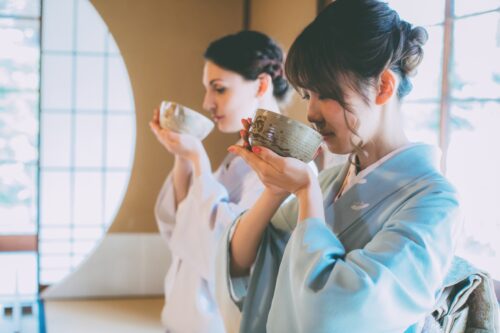
What makes Sadō (tea ceremony) a profound ritual rather than just drinking tea? I argue that the merchant who formalized it was a genius to elevate a simple daily routine. This leads to the Zen Paradox: the spiritual core of mindfulness that balances objective observation (seeing a dirty rock as it is) with imaginative emptiness (seeing a whole garden in a single flower). We hope this Zen spirit will make you see expansive beauty in the simplicity of our furniture. -

The Beauty of Imperfection: Why the Japanese Cherish Falling Cherry Blossoms and Decaying Ruins
Why are Japanese people addicted to cherry blossoms even when the petals are falling? I explore the national aesthetic that finds beauty in the transient and imperfect, connecting it to the popularity of decaying ruins and our vulnerability to natural disasters. This philosophy—Wabi-Sabi—teaches us to cherish a single petal in a puddle over a perfect bloom. I conclude by explaining how this spirit is applied to our wooden furniture, where uneven character and aging are, in fact, the design. -
The Backlash Wisdom: Why Ambiguity is the Japanese Architect of Harmony (and the Key to Durable Furniture)
Ambiguity is a necessary evil—a survival mechanism. We explore the theory that Japanese ambiguity is genetic (linked to S-alleles of the serotonin transporter). Discover the Backlash Wisdom: Ambiguity is not a failing, but a necessary cultural cushion—just like the intentional 'play' in a wooden furniture joint that keeps the whole structure from tearing itself apart. -

The Death of the “Monster”: Why Efficiency is Killing Our Passion
In the 90s, the only rival for a GT-R was another GT-R. Explore the "American Graffiti" days of Hokkaido's streets and why our past chairman’s defiance of marketing reflects the beautiful, irrational soul of human craftsmanship.