
nature– tag –
-
The Unseen Dread: Why J-Horror Terrifies Us by Elevating the Everyday Unknown
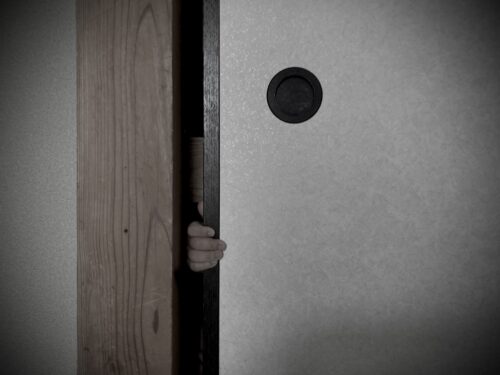
Why do we seek fictional fear? Because that emotion overwhelms the rational knowledge of whether the threat is real (unlike sadness, which is easily dismissed). This explains the difference between Hollywood and J-Horror. Hollywood gives us physical terror—monsters that bite and claw. J-Horror, exemplified by The Ring, gives us psychological anxiety—the silent evil that crawls out of a video cassette, breaching the reality of our everyday life. This unique Japanese trait—finding a small dose of the extraordinary in the ordinary (like going to a public bath)—is what makes the horror so pervasive. Our furniture aims for a similar, though less scary, effect: making your everyday activities a little more special. -
The Ultimate Unkai: The Business Genius of Turning Disaster Ruins into a Sea of Clouds
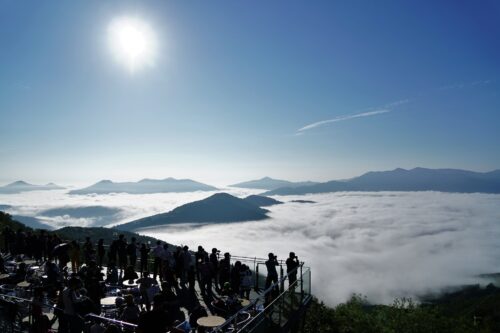
Tomamu was a ruin left by Japan's Bubble Economy. We uncover the Unkai Paradox: its resurrection came not from a CEO, but a humble lift mechanic's observation. We analyze the success of the 'Unkai Terrace'—a tourism product based on luck and a 3-hour window—and how we captured that cloud-like comfort in our Mola sofa. Why drive nine hours for a chance at a cloud when you can guarantee a perfect simulation at home? -
Anthills and Windmills: Is Human Infrastructure Truly ‘Artificial,’ or Just Nature’s Next Step?
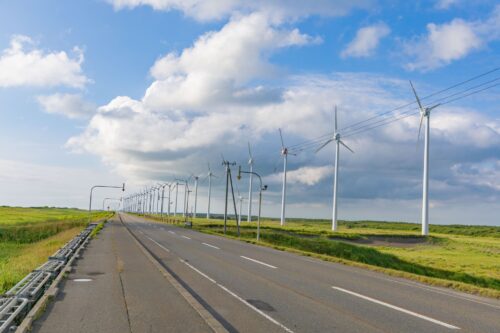
Why do people object to windmills? They say "natural landscapes are spoiled by artificial human structures." But I suspect this reflects human arrogance. I find validation in the words of sci-fi writer Stanisław Herman Lem: he argued that we see an anthill as "natural" but our houses as "artificial" because we believe we are beyond nature. If we accept that we are merely one part of nature, then a human structure is no more "artificial" than a structure built by a beaver. This perspective is liberating. Maybe we should stop seeing "artificial blight" where there is just a very tall anthill, built by nature's cleverest species. -
Curiosity Killed the Cat (and Made Us Eat Blowfish): Introducing Hokkaido Smoked Coffee
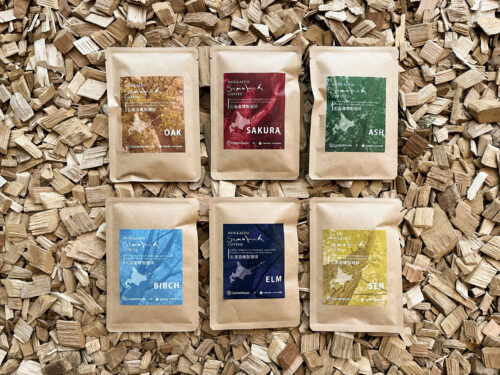
Why did our ancestors risk death to eat blowfish? I argue that the answer is not taste, but our insatiable human curiosity. I demonstrate this uncontrollable urge by sharing a behavioral science experiment where students voluntarily chose to receive an electric shock—repeatedly—just to satisfy their curiosity. This inherent human nature leads to our new product: Hokkaido Smoked Coffee, where beans are smoked using the wood chips from our furniture. Don't pretend you aren't curious; you can't help yourself. Risk a small shock of flavor! -
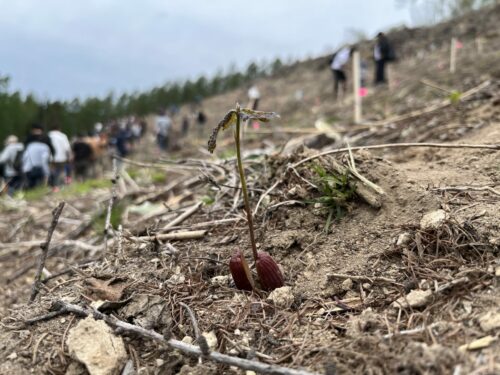
The 100-Year Bet: Why We Plant Oak Trees in Hokkaido (and the Martin Luther Paradox)
Why does planting a tree feel so profoundly positive? You cannot plant a tree without a radical, almost arrogant degree of hope for a future you will not see. For us, this means taking a 100-Year Bet: planting oak trees today that the children who join us will likely never see turned into furniture. This is the profound irony of investing in a raw material only for an entirely unseen future generation. -
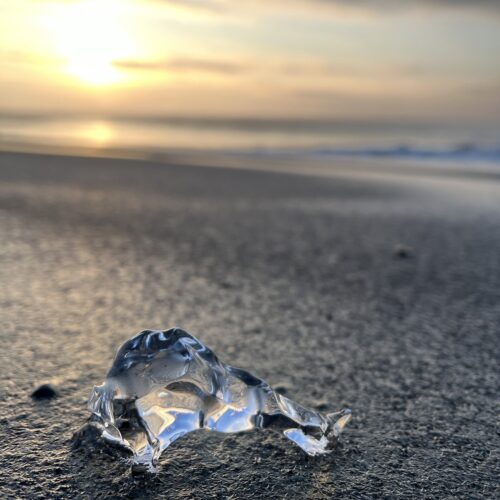
The Power of a Name: How ‘Jewelry Ice’ Turned a Nobodys’ Coast into a Global Destination
The cult of ice: Over 100 people gathered in punishing cold before dawn to see the Jewelry Ice. We explore the power of a name: worthless river ice was renamed 'Jewelry Ice' and became a global phenomenon. Money is a form of appreciation for perceived value. We must find the 'Jewelry Wood' moment for our furniture. -

Hidden gems in Hokkaido : Autumn leaves everywhere
There are so many hidden gems in Hokkaido. You can see beautiful scenery e.g.; lakes, mountains, forest, sea and so on. I would like to share some gems in Hokkaido. 【Autumn leaves everywhere】 Many people may not like to Hokkaido after ... -
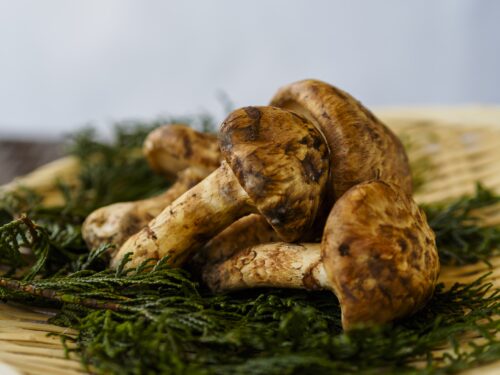
The $300 Sock Test: Why Mushroom Hunting in Hokkaido Is for the Brave (and the Bored)
Why does Japan's $300 Matsutake mushroom smell like dirty socks overseas? I explore the cultural acclimatization of fungi, the 4,000-year history of risk, and the scientific mystery of poisonous mushrooms. I then take you to Hokkaido, the last mushroom frontier, where unpicked bounty proves the biodiversity and health of our forests—and the quality of our wooden furniture. -

Hidden gems in Hokkaido : Secret forest next to Lake Akan
There are so many hidden gems in Hokkaido. You can see beautiful scenery e.g.; lakes, mountains, forest, sea and so on. I would like to share some gems in Hokkaido. 【Must visit in eastern part of Hokkaido】 Lake Akan is a beautiful crat... -

Hidden gems in Hokkaido : Mt. Yotei (Yotei zan/ EZO FUJI)
There are so many hidden gems in Hokkaido. You can see beautiful scenery e.g.; lakes, mountains, forest, sea and so on. I would like to share some gems in Hokkaido. 【The Mt. Fuji of Hokkaido "Mt. Yotei"】 Mt. Yotei, known as Yotei zan, ...