
Japanese Culture and Traditions– category –
-
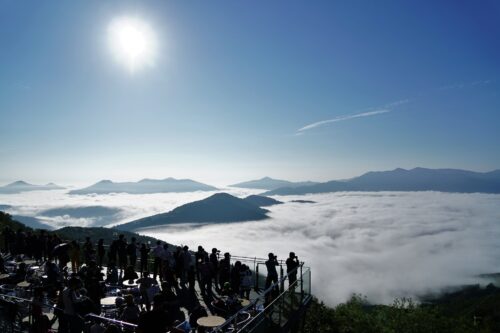
The Ultimate Unkai: The Business Genius of Turning Disaster Ruins into a Sea of Clouds
Tomamu was a ruin left by Japan's Bubble Economy. We uncover the Unkai Paradox: its resurrection came not from a CEO, but a humble lift mechanic's observation. We analyze the success of the 'Unkai Terrace'—a tourism product based on luck and a 3-hour window—and how we captured that cloud-like comfort in our Mola sofa. Why drive nine hours for a chance at a cloud when you can guarantee a perfect simulation at home? -

Anthills and Windmills: Is Human Infrastructure Truly ‘Artificial,’ or Just Nature’s Next Step?
Why do people object to windmills? They say "natural landscapes are spoiled by artificial human structures." But I suspect this reflects human arrogance. I find validation in the words of sci-fi writer Stanisław Herman Lem: he argued that we see an anthill as "natural" but our houses as "artificial" because we believe we are beyond nature. If we accept that we are merely one part of nature, then a human structure is no more "artificial" than a structure built by a beaver. This perspective is liberating. Maybe we should stop seeing "artificial blight" where there is just a very tall anthill, built by nature's cleverest species. -

The 3000Hz Paradox: Why We Hate Our Own Voice (But Love Hatsune Miku Synthetic Sound)
The Universal Horror: The top co-occurrence word for "own voice" in a Japanese search is "ugly." We explore the Vocaloid Paradox: why Japan embraced Miku Hatsune’s synthetic voice, actively demanding a sound that is obviously artificial. This aesthetic of artificiality shows that human psychology is far more complex than the simple science of the 3000 Hz frequency. We have a plan to collaborate with her. -
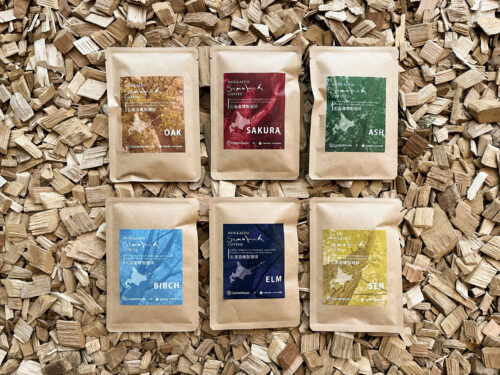
Curiosity Killed the Cat (and Made Us Eat Blowfish): Introducing Hokkaido Smoked Coffee
Why did our ancestors risk death to eat blowfish? I argue that the answer is not taste, but our insatiable human curiosity. I demonstrate this uncontrollable urge by sharing a behavioral science experiment where students voluntarily chose to receive an electric shock—repeatedly—just to satisfy their curiosity. This inherent human nature leads to our new product: Hokkaido Smoked Coffee, where beans are smoked using the wood chips from our furniture. Don't pretend you aren't curious; you can't help yourself. Risk a small shock of flavor! -
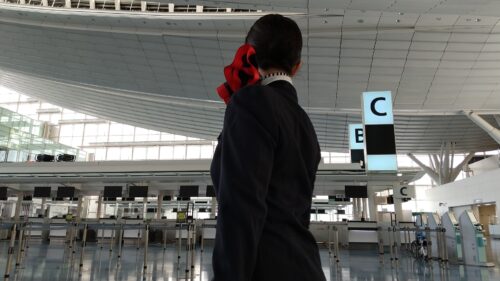
The Disease of Youth: Why the Japanese Uniform Is a Symbol of Rebellion and Belonging
You love the aesthetic of the Japanese seifuku from Sailor Moon. But what is the reality? Youth is a disease from which, I hope, I have recovered. We explore the Uniform Paradox: Japanese teenagers rebel against school rules but never the uniform itself—a profound ambivalence that defines our culture. -
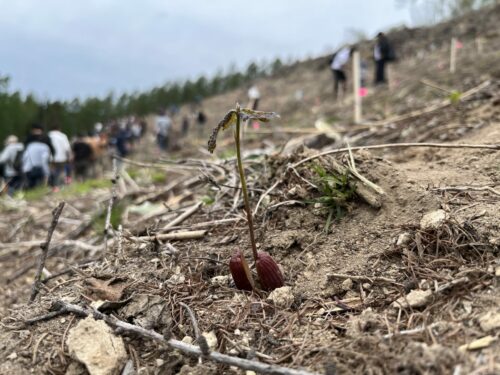
The 100-Year Bet: Why We Plant Oak Trees in Hokkaido (and the Martin Luther Paradox)
Why does planting a tree feel so profoundly positive? You cannot plant a tree without a radical, almost arrogant degree of hope for a future you will not see. For us, this means taking a 100-Year Bet: planting oak trees today that the children who join us will likely never see turned into furniture. This is the profound irony of investing in a raw material only for an entirely unseen future generation. -

The Howard Hughes Dilemma: Why We Commute Two Hours to Work in Stylish Offices
What is the meaning of work? I begin by contemplating the Howard Hughes Dilemma—the tragic loneliness of a titan who isolated himself from his work. This contrasts sharply with the Stylish Paradox of Tokyo's furniture makers: beautiful, showcase offices paired with full remote work. I ask why workers commute two hours a day to the office, concluding that the underlying drive is a profound mystery of human connection. Our upcoming office renovation is a trial to prove that the opposite of Howard Hughes is a good chair and a friendly colleague. -

The Power of a Name: How ‘Jewelry Ice’ Turned a Nobodys’ Coast into a Global Destination
The cult of ice: Over 100 people gathered in punishing cold before dawn to see the Jewelry Ice. We explore the power of a name: worthless river ice was renamed 'Jewelry Ice' and became a global phenomenon. Money is a form of appreciation for perceived value. We must find the 'Jewelry Wood' moment for our furniture. -

The Levitt Principle: How Removing Barriers and Redefining Purpose Creates Billion-Dollar Hits
I analyze the success of the Convenience Gym, which found a million members by removing every possible barrier to exercise. Then, I examine the hit Men's Parasol, which succeeded by simply redefining the item's purpose. Both confirm Theodore Levitt's Principle: "Sell the hole, not the drill." I apply this to our craft by proposing to engrave family names on dining chairs—shifting the purpose from "comfort" to "making the place where family members return to." (The only downside: it risks making parents terribly sad after the kids fly the nest.) -
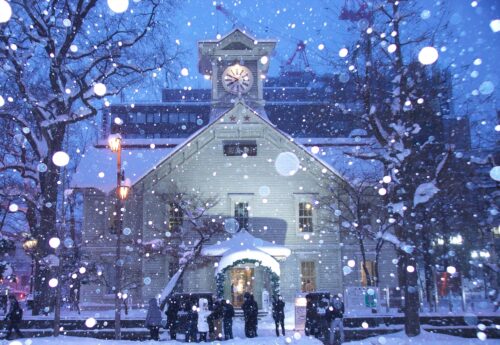
KFC, Cake, and Loneliness: The Bizarre Ways Japan Celebrates a “Culturally Blank” Christmas
Why do Japanese people eat KFC and cake on Christmas? I analyze this "culturally blank" phenomenon, tracing the origins of the traditions from aggressive commercial marketing to intense social pressure to avoid being a "loser." I conclude by inviting readers to Hokkaido to trade the chaos of collective anxiety for the silence and true, natural beauty of a White Christmas.