
travel– tag –
-

The Canvas Paradox: How a Sustainable Sapporo Hotel Eased My Chairman’s Travel Trauma
We shared the kind of misery that forges a very Japanese, unbreakable bond. I subjected my Chairman to the cheapest hotels worldwide—often in rooms where you couldn't open a suitcase. Now, the new Royal Park Canvas in Sapporo offers a blueprint for sustainable travel, built with the quality and consciousness that finally won his approval. -
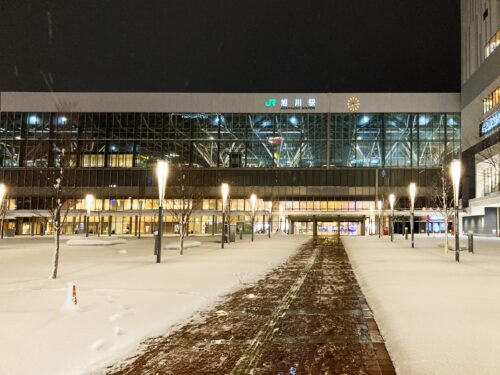
Hokkaido Is the Mecca of Wooden Furniture
Did you know Haagen-Dazs was originated in the US? I thought it came from somewhere in North Europe, which, I assume, would be exactly what the brand founder intended. Let me tell you another example. In Japan, canned coffee is one of th... -

What Makes Camping So Appealing to Everyone Today?
People who like camping will say “It’s for extraordinary experiences,†but what people actually do in camping are boiled down to super-ordinary things, like preparing meal, eating, clearing up after meal, and sleeping. I know it’s important to do such everyday routines in nature. -

September in Sapporo
Sapporo in September, completely different from the main land of Japan where people still suffer from lingering summer heat. The capital city of Hokkaido has a population of two million, but has such a big natural park in the center of t... -

The Beauty of Imperfection: Why the Japanese Cherish Falling Cherry Blossoms and Decaying Ruins
Why are Japanese people addicted to cherry blossoms even when the petals are falling? I explore the national aesthetic that finds beauty in the transient and imperfect, connecting it to the popularity of decaying ruins and our vulnerability to natural disasters. This philosophy—Wabi-Sabi—teaches us to cherish a single petal in a puddle over a perfect bloom. I conclude by explaining how this spirit is applied to our wooden furniture, where uneven character and aging are, in fact, the design. -

The Sacred Chaos: Why Japanese Summer Festivals Are Essential for Local Relationships (And Our Complicated Faith)
We are a nation that is both deeply pragmatic and quietly spiritual. We have three times more shrines than convenience stores. Natsu Matsuri is essential, not for the gods, but for workplace harmony—and convincing ourselves that summer is finally, truly over. -

The Identity Crisis of Hokkaido: A Journey Through “Desperate” Town Taglines
When conservative civil servants try to be creative, the results are often hilariously sorrowful. Explore the baffling world of Hokkaido's town taglines—where bells and flowers become "unique" features—and discover why Asahikawa chose furniture over its 100 rivers. -

The Machu Picchu Trap: Why You Should Stop Looking for Yourself and Start Digging
If travel truly made you wiser, you'd notice how bored everyone is by your stories. Explore a humorous yet biting critique of the modern "self-discovery" trend and discover why Hokkaido's craftsmen find more truth in wood than others find in Machu Picchu. -
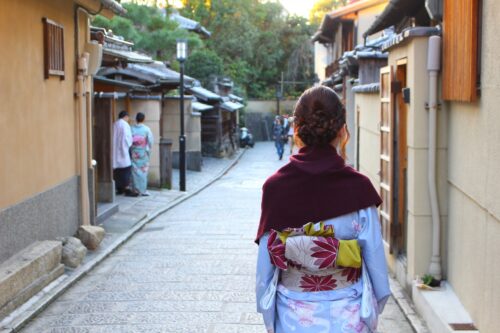
The Silent Code of Kyoto: Why Their “Yes” Actually Means “You Are Doing It Wrong”
Kyoto's language is a social minefield. We decode the hidden meanings behind their polite phrases—like why "Your children are so cheerful" is actually code for "Shut them up!" I explore how this high-context culture evolved as a life-saving political skill, and argue that this unique Japanese ability to read unspoken intentions is now essential for transmitting traditional craftsmanship. -
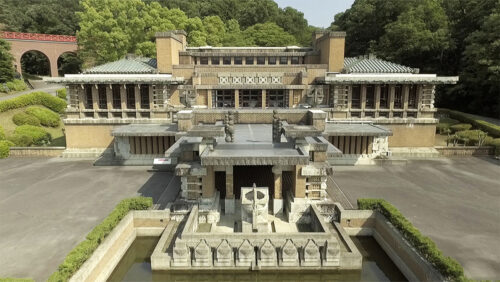
God in the Details, Disaster in the Whole: Frank Lloyd Wright’s Imperial Hotel and the Japanese Paradox
Frank Lloyd Wright’s Imperial Hotel survived the Great Kanto Earthquake on its opening day in $1923$ due to his innovative floating structure—a profound, immediate validation of his genius. Seeing the meticulous carvings, I recall the dictum: "God is in the details." This detail-orientation is a Japanese trait (our furniture is "full of God"), but it’s a paradox: some Japanese products, like certain cars, excel in detail yet "can't see the wood for the trees," resulting in a poor overall design. This is the Japanese Paradox: excelling at the micro-level while sometimes faltering at the macro-level. We strive to master both the detail and the clean, coherent form.